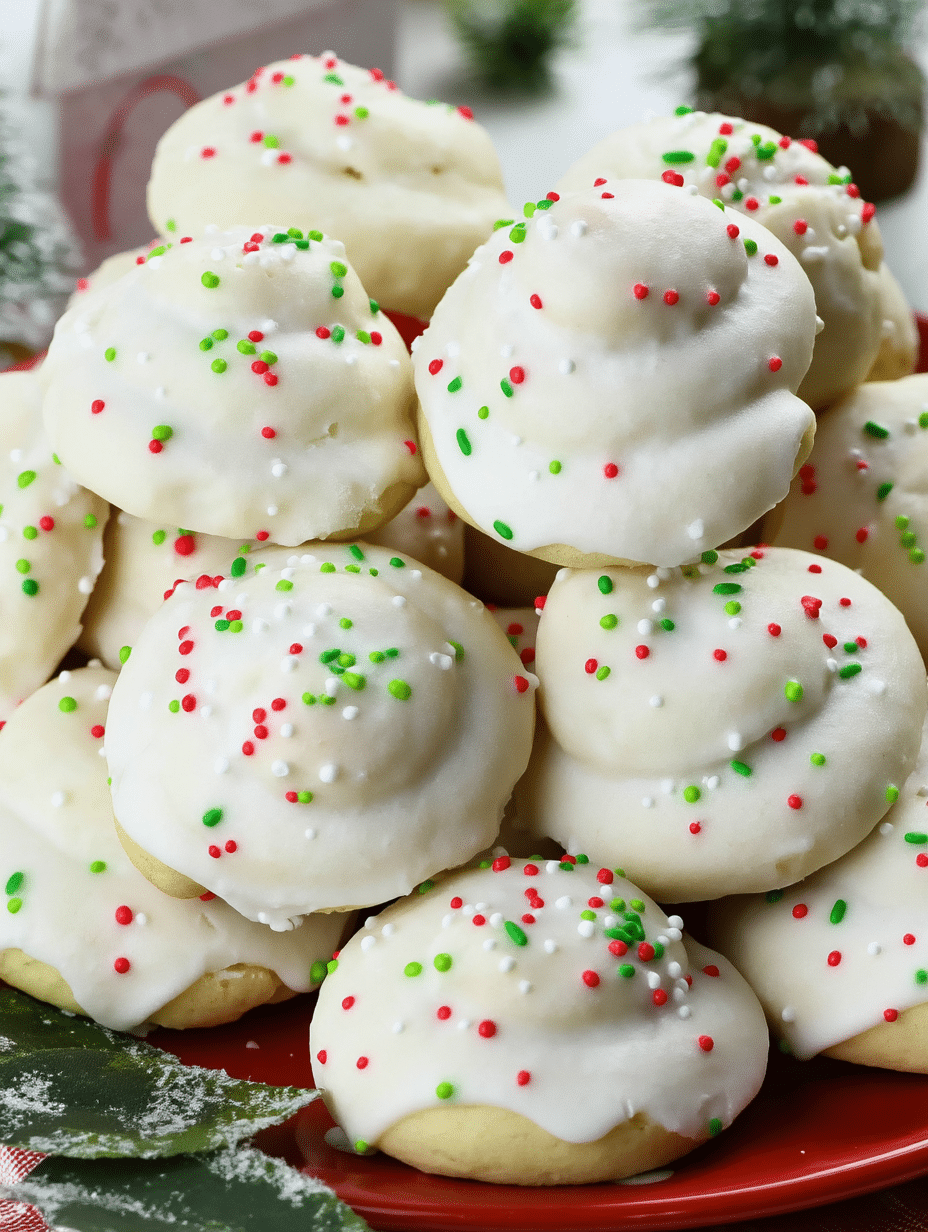
Italian Christmas cookies are soft, buttery treats finished with a smooth vanilla glaze and colorful nonpareil sprinkles. With their delicate sweetness and festive appearance, these glazed cookies are a lovely addition to Christmas cookie trays, holiday parties, and homemade gift boxes.
This Italian Christmas cookie recipe uses simple baking ingredients, including eggs, butter, sugar, flour, and baking powder. The dough is chilled before shaping, then baked until the bottoms are lightly browned while the tops remain pale. Once cooled, the cookies are dipped in a sweet glaze and decorated with sprinkles for a classic holiday finish.
You can shape the dough into simple one-inch balls or create decorative swirls for a more traditional-looking cookie platter. Either option makes these cookies easy to prepare for holiday baking.
Why You’ll Love These Italian Christmas Cookies
- Simple baking ingredients: The cookie dough uses familiar pantry staples, so you can prepare it without specialty ingredients.
- Soft, buttery texture: Butter and eggs give the cookies their rich flavor and tender texture.
- Two shaping options: Make round cookies for a straightforward approach or shape the dough into swirls for a decorative finish.
- Sweet vanilla glaze: A simple powdered sugar glaze adds sweetness and gives the cookies their signature decorated appearance.
- Perfect for holiday sharing: The recipe yields 36 cookies, making it suitable for Christmas gatherings, cookie exchanges, and homemade gifts.
Italian Christmas Cookies Ingredients
Each ingredient has a specific role in creating the cookie dough, glaze, and festive decoration.
Cookie Dough
Eggs: Four eggs provide structure and help bring the dough together.
Granulated sugar: One cup of sugar sweetens the cookies and complements the vanilla glaze.
Unsalted butter: Half a cup of softened butter contributes richness and a buttery flavor. Room-temperature butter also makes it easier to cream the ingredients evenly.
Vanilla or almond extract: Two teaspoons of vanilla extract give the cookies a familiar, sweet aroma. Almond extract is offered as an alternative in the original recipe.
All-purpose flour: Three and a half cups of flour form the base of the dough and help the cookies hold their shape.
Baking powder: Four teaspoons of baking powder provide leavening during baking.
Vanilla Glaze and Decoration
Powdered sugar: Two cups create the base of the glaze, giving it sweetness and a smooth consistency.
Vanilla extract: Half a teaspoon adds flavor to the icing.
Milk: Three tablespoons help turn the powdered sugar into a glaze. Additional milk can be added if the mixture is too thick.
Nonpareil sprinkles: These small, colorful sprinkles add a festive finishing touch. Apply them while the glaze is still wet so they adhere properly.
Helpful Tips for Making Italian Christmas Cookies
- Use softened butter. Butter that has softened at room temperature is easier to cream with the sugar and extract. If needed, cut it into smaller pieces and let it sit for about 15–20 minutes.
- Mix the dough just until combined. Once the flour mixture is added, avoid excessive mixing. Overmixing can contribute to dense, tough cookies.
- Chill the dough for one hour. Chilling makes the dough easier to handle and shape. The dough will also firm up during chilling, so avoid adding too much extra flour.
- Use flour sparingly when shaping. A lightly floured surface helps prevent sticking when rolling the dough into ropes. Add extra flour only when necessary.
- Leave space between the cookies. Arrange the shaped cookies about two inches apart on the prepared baking sheets.
- Watch the color carefully. Bake at 375°F for 8–10 minutes. The bottoms should be lightly browned while the tops remain light.
- Cool completely before glazing. Warm cookies can cause the glaze to melt or the decorations to slide off.
- Adjust the glaze gradually. Add milk if the glaze is too thick or powdered sugar if it is too thin. Aim for a thick but pourable consistency.
How to Make Italian Christmas Cookies
Step 1: Combine the Dry Ingredients
Whisk together the all-purpose flour and baking powder in a bowl. Set the mixture aside while preparing the wet ingredients.
Step 2: Cream the Butter and Sugar
In a large mixing bowl, cream the softened butter, vanilla extract, and granulated sugar until combined.
Step 3: Add the Eggs
Add the eggs one at a time, mixing after each addition until incorporated.
Step 4: Make the Dough
Add the flour mixture to the butter and egg mixture. Mix until combined, then knead until the dough is firm and no longer sticky.
If necessary, add a little more flour, but avoid adding too much. The dough will become firmer after chilling.
Step 5: Chill the Dough
Wrap the dough in plastic wrap and refrigerate for one hour. This resting time makes the dough easier to shape and helps the cookies maintain their form during baking.
Step 6: Prepare the Baking Sheets
Preheat the oven to 375°F. Line baking sheets with parchment paper and set them aside.
Step 7: Shape the Cookies
Choose either of the two shaping methods.
For round cookies: Roll the dough into one-inch balls.
For swirl cookies: Cut off a small amount of dough and roll it on a floured surface into a strip approximately six inches long and about ⅓–½ inch thick. Pinch one end and twirl the rest of the strip around it to form a circle. Tuck the remaining edge underneath the cookie.
Step 8: Arrange the Cookies
Place the shaped cookies on the prepared baking sheets, leaving about two inches between each cookie.
Step 9: Bake
Bake at 375°F for 8–10 minutes. The bottoms should be lightly browned, but the tops should remain light.
Remove the cookies from the oven and transfer them to a wire rack. Allow them to cool completely before adding the glaze.
Step 10: Prepare the Glaze
Combine the powdered sugar, ½ teaspoon of vanilla extract, and 3 tablespoons of milk. Mix until smooth.
The glaze should be thick but still runny enough for dipping. If it is too thick, add more milk. If it is too thin, mix in more powdered sugar.
Step 11: Glaze and Decorate
Dip the tops of the cooled cookies into the glaze, allowing excess glaze to drip back into the bowl.
Place the cookies on a cooling rack and immediately sprinkle the tops with nonpareil sprinkles while the glaze is still wet.
Allow the glaze to dry completely, which takes about 30–60 minutes.
Variations and Substitutions
Choose Vanilla or Almond Extract
The original recipe allows either vanilla or almond extract in the cookie dough. Vanilla provides a familiar sweet flavor, while almond extract offers a different aromatic note.
For the glaze, the recipe specifies vanilla extract.
Make Round or Swirl Cookies
The dough can be shaped into simple round cookies or decorative swirls. Both shapes use the same dough and baking temperature, so you can choose the style that best suits your holiday cookie tray.
Customize the Sprinkles
Nonpareil sprinkles give these cookies their festive appearance. You can select colors that suit your Christmas decorations or the occasion, while keeping the original glaze and cookie recipe unchanged.
Serving Suggestions
Arrange Italian Christmas cookies on a holiday dessert platter alongside other homemade cookies and small baked treats. Their glazed tops and colorful sprinkles add variety to a Christmas cookie assortment.
These cookies also work well for cookie exchanges, family celebrations, and edible gift boxes. If you’re packing them as gifts, allow the glaze to dry completely before arranging the cookies in their container.
For a festive presentation, arrange the round and swirl-shaped cookies together so the different shapes add visual interest.
Frequently Asked Questions
Why does the dough need to chill?
Chilling the dough for one hour makes it easier to handle and shape. It also helps the cookies maintain their shape during baking.
Why are the tops supposed to remain light?
The original recipe specifies that the cookie bottoms should be lightly browned while the tops remain light. Bake for 8–10 minutes at 375°F and watch the color rather than waiting for the entire cookie to brown.
Can I make these cookies in different shapes?
Yes. The recipe provides instructions for one-inch round cookies and six-inch strips twisted into swirls. Both options use the same dough.
When should I add the glaze and sprinkles?
Wait until the cookies have cooled completely before glazing. Add the nonpareil sprinkles while the glaze is still wet, then let it dry for about 30–60 minutes.
Can I freeze Italian Christmas cookies?
The original recipe states that baked cookies can be frozen for up to three months. For the best results according to the recipe notes, freeze them without the glaze and decorations, then thaw at room temperature before serving.
Storage and Make-Ahead Tips
Store the finished Italian Christmas cookies in an airtight container at room temperature for up to one week, following the original recipe’s storage instructions.
For longer storage, the recipe notes recommend freezing baked cookies for up to three months. It is best to freeze them without the glaze and sprinkles. Thaw them at room temperature before serving, then decorate them with freshly prepared glaze and sprinkles.
If you’re preparing these cookies for Christmas gifts or a cookie exchange, you can bake them ahead of time and allow them to cool completely. Make sure the glaze has dried before stacking or packing the cookies to help keep the decorations intact.
A Festive Cookie for Christmas Baking
These Italian Christmas cookies combine a soft, buttery dough with a sweet vanilla glaze and colorful sprinkles. With two simple shaping options and ingredients commonly used in home baking, they’re a lovely addition to your holiday baking plans. Make a batch for your Christmas cookie tray, share them with family and friends, or save the recipe for your next festive baking day.
Print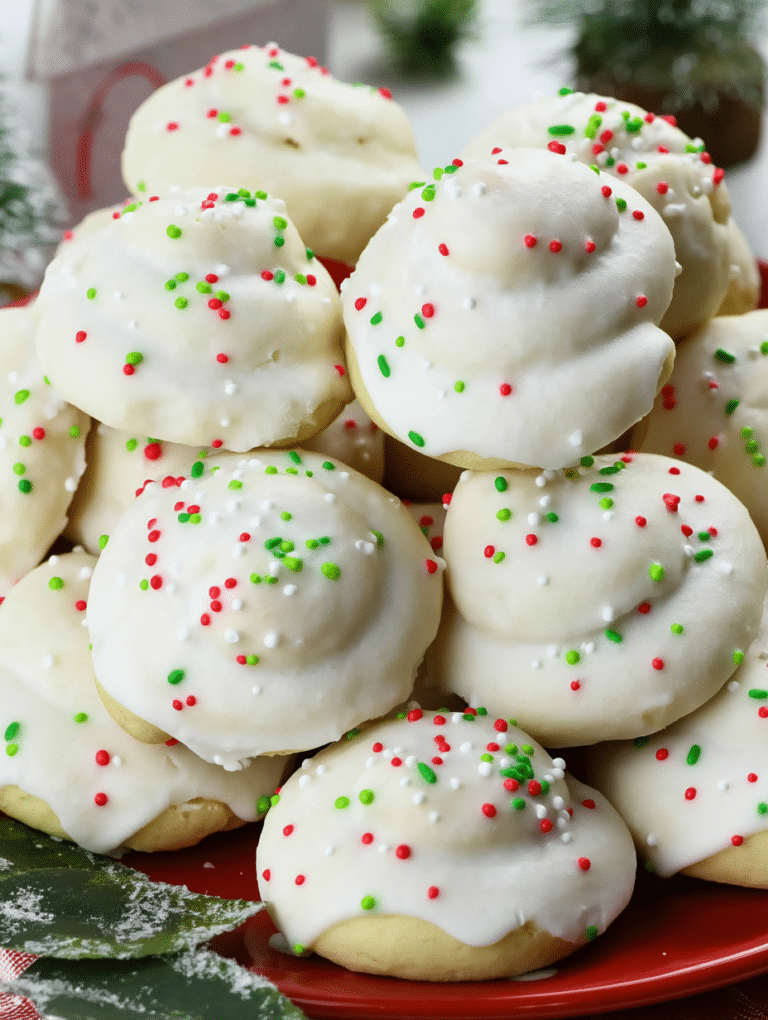
Italian Christmas Cookies – Soft, Buttery Cookies with Sweet Glaze
These Italian Christmas Cookies are soft, buttery holiday treats with a sweet vanilla glaze and colorful nonpareil sprinkles. Shape them into simple balls or traditional swirls for a festive cookie platter, holiday gathering, or homemade gift.
- Total Time: 40 minutes
- Yield: 36 cookies
Ingredients
Cookie Dough
- 4 eggs
- 1 cup granulated sugar
- 1/2 cup unsalted butter-softened at room temperature
- 2 teaspoons vanilla (or almond) extract
- 3 1/2 cups all-purpose flour
- 4 teaspoons baking powder
Glaze
- 2 cups powdered sugar
- 1/2 teaspoon vanilla extract
- 3 Tablespoons milk (or more if needed)
- Nonpareil sprinkles for decoration
Instructions
- Whisk together the flour and baking powder in a bowl. Set aside.
- In a large mixing bowl, cream the softened butter, vanilla extract, and sugar.
- Add the eggs one at a time, mixing after each addition until combined.
- Add the flour mixture and mix until combined.
- Knead until the dough is firm and no longer sticky, adding more flour if necessary. Avoid adding too much flour, as the dough will firm up after chilling.
- Wrap the dough in plastic wrap and chill in the refrigerator for 1 hour.
- Preheat the oven to 375°F. Line baking sheets with parchment paper.
- Shape the cookies into 1-inch balls, or make swirls. For swirls, take small pieces of dough and roll them on a floured surface into strips about 6 inches long and 1/3–1/2 inch thick. Pinch one end and twirl the remaining strip around it to form a circle, then tuck the end underneath.
- Place the cookies on the prepared baking sheets, spacing them about 2 inches apart.
- Bake at 375°F for 8–10 minutes. The bottoms should be lightly browned while the tops remain light.
- Transfer the cookies to a wire rack and let them cool completely before glazing.
Glaze
- Combine the vanilla extract, milk, and powdered sugar. Mix until smooth. The glaze should be thick but still runny. If it is too thick, add more milk; if it is too thin, add more powdered sugar.
- Dip the tops of the cooled cookies into the glaze and let excess glaze drip back into the bowl. Place the cookies on a cooling rack and add nonpareil sprinkles while the glaze is still wet. Allow the glaze to dry completely, about 30–60 minutes.
Notes
- Use room-temperature butter for a smooth, even dough. To soften butter quickly, cut it into smaller pieces and let it sit at room temperature for about 15–20 minutes.
- Mix the dough just until the ingredients are combined. Overmixing can make the cookies dense and tough.
- Chill the dough for 1 hour to make it easier to handle and shape and to help the cookies hold their shape while baking.
- Let the cookies cool completely before glazing so the icing does not melt or the decorations slide off.
- Store the cookies in an airtight container at room temperature for up to a week.
- Baked cookies can be frozen for up to 3 months. Thaw at room temperature before serving. For best results, freeze them without the glaze and decorations.
- Prep Time: 30 minutes
- Cook Time: 10 minutes
- Category: Dessert
- Method: Baking
- Cuisine: Italian